African cinema or African cinemas? This question sparks debate, given Africa’s vast cultural and historical diversity (Tcheuyap 2011). While this article does not seek to resolve this debate, it aims to explore the foundational elements of African cinema, identifying shared themes across the continent. The emergence of cinema in Africa is closely tied to a common historical thread: the struggle for national independence.
The first two key phases of African cinema are the colonial era and the era of decolonial cinema (un cinéma de la décolonisation) (Barlet and Forest, 2021). During the colonial era, Western films often portrayed Africa in a demeaning manner, focusing on vast jungles while ignoring its cultural richness (Murphy 2000). In the late 1950s and early 1960s, a significant body of films produced and directed by African filmmakers emerged for the first time. As Cham (1996, p.1) argues, “African filmmaking is, in a way, a child of African political independence.” Thus, early African cinema emerged in a post-colonial context defined by nationalism, political instability, and struggles against neocolonial influence (Cham, 1996).
African filmmakers infused their movies with strong political themes in response to colonial-era Western cinema, which had been used as an instrument of oppression. To counter pejorative portrayals of Africa (Murphy 2000), they appropriated film as a tool for resistance and decolonization (Diouf 2021). Their work aimed to challenge stereotypes and foster critical thought by addressing the social, political, cultural, and economic struggles of post-colonial African societies (Cham 1996). Through a pedagogical approach, these filmmakers sought to decolonize minds and contribute to Africa’s post-independence transformation (Diouf 2021).
Public Voice
It is essential to explore how African filmmakers and artists articulated their political vision. Several gatherings of African artists led to collective resolutions that shaped their cultural and political engagement. One key event was the Second Congress of Black Writers and Artists, held in Rome from March to April 1959 and organized by Présence Africaine, the Société Africaine de Culture, and the Istituto Italiano per l’Africa. This landmark meeting brought together over a hundred intellectuals from Africa, the Americas, and Europe to discuss Black unity and transnational collaboration (Royal Netherlands Institute in Rome, 2024). The Congress’s final resolution urged Black writers and artists to align their cultural work with the liberation struggles of their people while maintaining solidarity with global movements against colonization and for social progress (General Resolution, 1959).
A few years later, the Third World Filmmakers Meeting was held in Algiers (December 5–14, 1973), bringing together filmmakers from across the Global South to discuss shared challenges, including production, distribution, and their role in political struggles (Birri et al., 2014). By the end of the meeting, participants issued a resolution examining the impact of colonialism on local societies and cultures while advocating for militant cinema. The resolution emphasized that Third World filmmakers had a crucial role to play, as the fight for independence, freedom, and progress in cinema was intrinsically linked to broader anti-colonial and social struggles beyond the film industry (Resolutions of the Third World Filmmakers Meeting, Algiers, 1973, 2010).
A few years later, Algeria once again hosted a significant conference—the Second Congress of the Fédération Panafricaine des Cinéastes (FEPACI) in 1975. FEPACI was founded in 1970 by filmmakers who, as Burkinabé director Gaston Kaboré explained, sought to use cinema as a powerful tool to raise African consciousness and affirm the value of African lives and stories (Kaboré, 2020). The Second Congress adopted a Charter asserting that contemporary African societies remained politically, economically, and culturally dominated. It emphasized the urgent need to redefine development in a way that promoted liberation, highlighting the crucial role of culture and cinema in shaping a more independent and progressive future. From the outset, many African filmmakers embraced a militant role, taking a clear political stance in the decolonization process (The Algiers Charter on African Cinema, 1975, 2010).
The father
Among the filmmakers who embodied this militant approach, Ousmane Sembène stands out as a defining figure. Ousmane Sembène is often called the father of African cinema, though he himself was reluctant to embrace the title (Sendra n.d.). Born in Senegal, he moved to Marseille in the 1950s, where he worked as a dock worker, joined labor unions, and began writing novels (Diop 2020). After Senegal gained independence in the early 1960s, he returned home, but widespread illiteracy led him to view cinema as a more effective medium for reaching the masses. Believing that art played a crucial role in politics and revolution, he sought to create films accessible to the general public. To refine his skills, he moved to the USSR on a scholarship to study filmmaking. This marked the beginning of his distinguished directing career, during which he created several politically charged short and feature films (Dong, 2024).
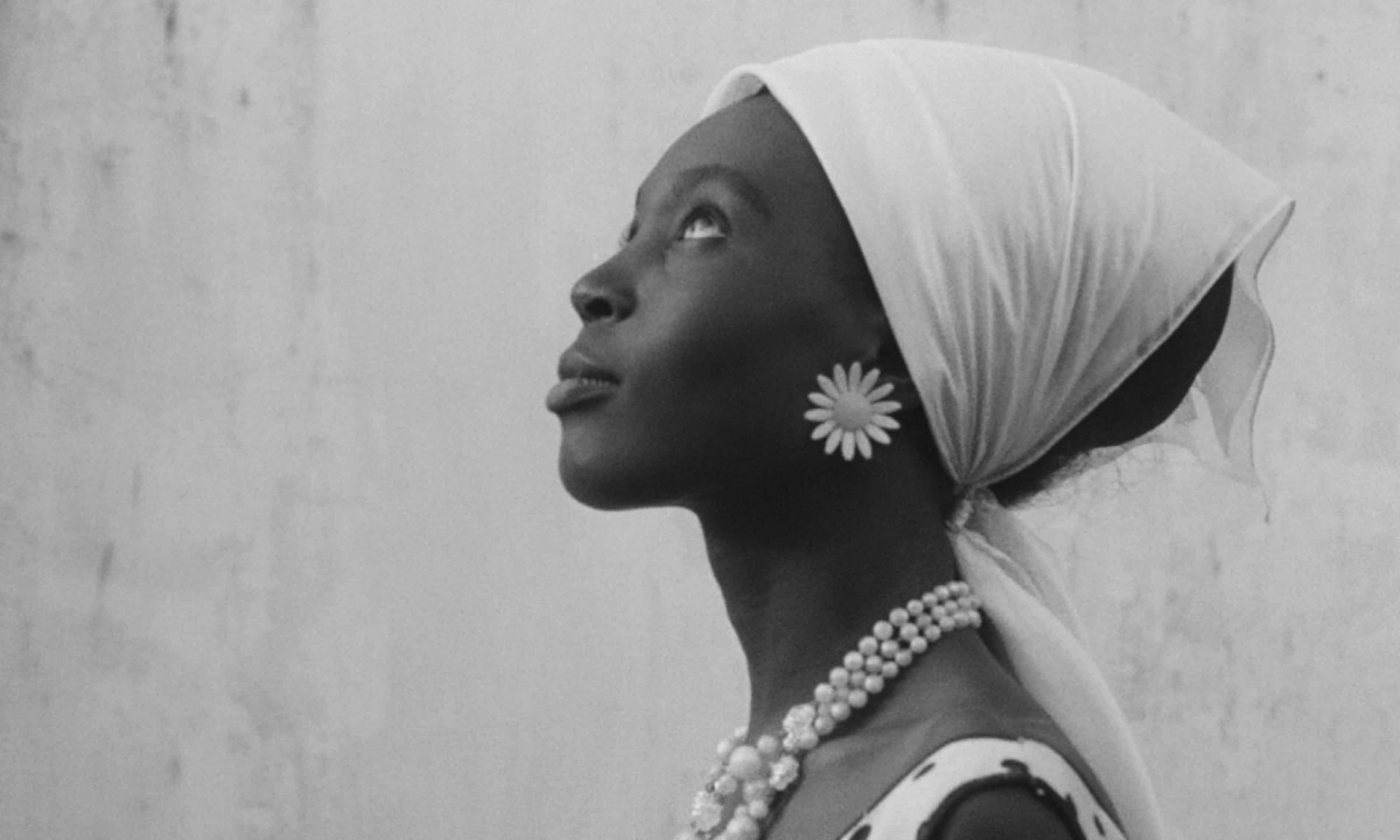
A true beauty in his filmography is Sembène’s Black Girl (1966) which was the first sub-Saharan African feature film to gain international recognition, winning the Prix Jean Vigo. Adapted from his short story The Promised Land, the film critiques neocolonial exploitation, which Sembène described as the “new black slave trade.” It follows Diouna, a Senegalese domestic worker who migrates to France, only to endure isolation, mistreatment, and cultural displacement. Using minimal synchronous sound, voiceover narration, and repetitive xalam-based musical cues, Sembène crafted a haunting atmosphere that deepens Diouna’s alienation. As the film unfolds, its narrative takes on allegorical and mythical dimensions, reinforcing its critique of post-colonial oppression and identity struggles. Black Girl remains a cornerstone of African cinema, offering a poignant critique of racial and economic exploitation.
The history of African cinema is inseparable from the continent’s political struggles. From the early days of independence, filmmakers viewed cinema as more than just an art form—it was a political weapon, a means to challenge colonial legacies, and a vehicle for social change. The gatherings of Black artists and filmmakers in the 1950s–70s reveal a collective commitment to decolonization through cinema. Figures like Ousmane Sembène exemplified this vision, using film to expose neocolonial oppression and reclaim African identity on screen. Today, the legacy of these early filmmakers endures, as contemporary African cinema continues to navigate themes of identity, resistance, and self-representation. Understanding the political origins of African cinema is essential to appreciating its ongoing role in shaping African narratives on a global stage.
Bibliography
Barlet, O., & Forest, C. (2021, April 30). Dates-clefs de l’Histoire des cinémas d’Afrique. Afrimages. Retrieved February 7, 2025, from http://afrimages.net/dates-clefs-de-lhistoire-des-cinemas-dafrique/
Cham, M.B. (1996) Introduction in Cham, M. B., & Bakari, I. I. (Eds.). African Experiences of Cinema (First Edition). British Film Institute.
Diop, S. (2020). Sociopolitical Representations in African Cinema: Paulin S. Vieyra, Djibril Diop Mambéty, Eddie Ugbomah and Ola Balogun in the Footsteps of Ousmane Sembène. Africa Development / Afrique et Développement, 45(2), 89–102.
Diouf, M. (2021, November 1). Decolonizing African Cinema: A History | Week 01 Foundations of African Cinema [Video recording]. https://www.youtube.com/watch?v=2XbLor_JUI4.
Dong, K. (2024, January 19) Ousmane Sembène, Cinematic Revolutionary. Harvard Film Archive. https://harvardfilmarchive.org/programs/ousmane-sembene-cinematic-revolutionary-2
General Resolution: Independence and Unity. (1959). Présence Africaine, 1, 419–421. https://doi.org/10.3917/presa.024.0419
Kaboré, G. (2020). The Long Take: Gaston Kaboré on the Formation, Evolution & Challenges to FEPACI & FESPACO. Black Camera, 12(1), 209–236. https://doi.org/10.2979/blackcamera.12.1.17
Murphy, D. (2000). Africans Filming Africa: Questioning Theories of an Authentic African Cinema. Journal of African Cultural Studies, 13(2), 239–249.
Resolutions of the Third World Filmmakers Meeting, Algiers, December 5–14, 1973. (2010). Black Camera, 2(1), 155–165. https://doi.org/10.2979/blc.2010.2.1.155
Royal Netherlands Institute in Rome (2024, April 23). Workshop: The Second Congress of Black Writers and Artists, 65 years later. https://www.knir.it/nl/evenementen/workshop-the-second-congress-of-black-writers-and-artists-65-years-later/
Tcheuyap, A. (2011). African Cinema (s) Definitions, Identity and Theoretical Considerations. Critical Interventions, 5(1), 10-26.
Sendra, E. (n.d.) Toolkit: Senegal on the Screen. Screen Worlds. Retrieved February 7, 2025, from: https://screenworlds.org/wp-content/uploads/SW_Lagos_Toolkit_Estrella-Sendra_1-1.pdf The Algiers Charter on African Cinema, 1975. (2010). Black Camera, 2(1), 165–167. https://doi.org/10.2979/blc.2010.2.1.165
Leave a Reply